
Understanding Year 8 Science Test Papers
Year 8 Science tests assess student comprehension of key scientific concepts. These evaluations, often available as PDF downloads, help gauge progress and identify areas needing improvement.
What are Year 8 Science Tests?
Year 8 Science tests are formal assessments designed to evaluate a student’s understanding of fundamental scientific principles typically covered during their eighth year of schooling. These tests aren’t simply about memorizing facts; they aim to assess a student’s ability to apply scientific knowledge to solve problems and interpret data.
Commonly, these assessments encompass a range of question types, including multiple-choice, short answer, and extended response questions. Many schools and educational resources now offer these tests in PDF format for convenient access and practice. Finding Year 8 Science test papers with answers freely available online allows students to self-assess and prepare effectively. These tests cover core areas like biology, chemistry, and physics, building a foundation for future scientific study.
The Importance of Practice Papers
Practice papers are invaluable tools for Year 8 Science students preparing for assessments. Regularly working through these papers builds confidence and familiarity with the exam format, reducing test-day anxiety. Utilizing Year 8 Science test papers with answers – often found as PDF downloads – allows for self-assessment and identification of knowledge gaps.
These papers aren’t just about getting the right answer; they’re about understanding why an answer is correct. Reviewing incorrect responses, alongside the provided answer key, reinforces learning and prevents repeating mistakes. Consistent practice improves time management skills, crucial for completing tests efficiently. Accessing free resources online makes effective preparation accessible to all students, fostering academic success.
Key Topics Covered in Year 8 Science
Year 8 Science curricula typically encompass a broad range of topics across Biology, Chemistry, and Physics. Biology focuses on cells, organisms, ecosystems, and the human body. Chemistry explores matter, its properties, chemical reactions, and the periodic table. Physics delves into forces, motion, energy, and light.
Year 8 Science test papers with answers, often available as PDF downloads, frequently assess understanding of these core areas. Expect questions on scientific methods, data analysis, and practical applications. Preparation should involve reviewing these topics thoroughly. Finding practice papers aligned with the specific curriculum is key to effective revision, ensuring students are well-prepared for their assessments and future scientific studies.
Finding Free Year 8 Science Test Papers with Answers (PDF)
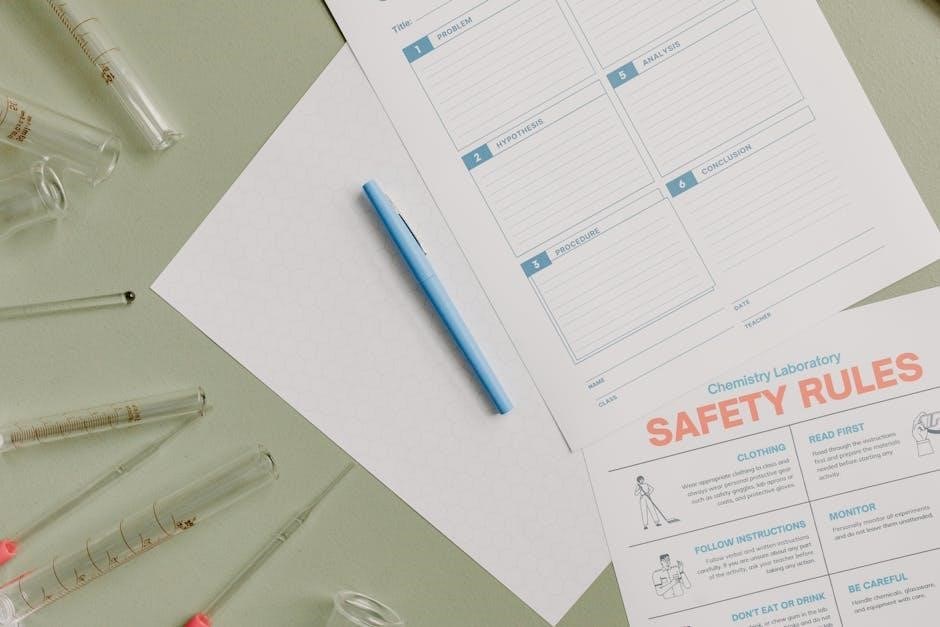
Free Year 8 Science test papers, often in PDF format, are readily available online through educational websites and resource platforms for practice.
Reliable Websites for Free Downloads
Locating trustworthy sources for Year 8 Science test papers with answers in PDF format requires careful consideration. Several websites specialize in providing free educational resources. BBC Bitesize offers comprehensive revision materials, including practice questions aligned with the curriculum, though complete test papers are less common.
Exam Papers Online and Past Papers are dedicated repositories of past exam papers from various exam boards, potentially including Year 8 Science assessments. However, verifying the relevance to your specific curriculum is crucial. Education.com and K5 Learning provide worksheets and quizzes that can supplement test preparation. Always prioritize websites with a clear reputation for accuracy and educational integrity, and be cautious of sites with excessive advertising or questionable content.
Search Terms to Use for Effective Results
To efficiently find Year 8 Science test papers with answers in PDF format, utilize specific and targeted search terms. Begin with phrases like “Year 8 Science practice papers”, “Key Stage 3 Science tests PDF”, or “Year 8 Science exam questions and answers”.
Refine your search by adding the specific exam board if known, such as “AQA Year 8 Science past papers” or “Edexcel Key Stage 3 Science tests”. Including “free download” or “with answers” will filter results accordingly. Experiment with variations like “Year 8 Science revision worksheets” and combine terms for broader coverage. Remember to check file types using the “filetype:pdf” operator in your search engine for direct PDF access.
Checking the Validity and Accuracy of Papers
When downloading Year 8 Science test papers with answers in PDF format, verifying their validity and accuracy is crucial. Always cross-reference the content with your school’s syllabus or the relevant exam board’s specifications. Look for papers originating from reputable sources like established educational websites or schools.
Carefully review the answer keys; inconsistencies or errors can indicate an unreliable resource. Check the date of the paper to ensure it aligns with the current curriculum. Be cautious of papers with poor formatting or grammatical errors. Prioritize resources that clearly state their origin and author, fostering trust in their educational value.

Types of Questions in Year 8 Science Tests
Year 8 Science tests commonly feature multiple-choice, short answer, and long answer questions. Some tests also include practical application problems.
Multiple Choice Questions
Multiple choice questions are a staple in Year 8 Science tests, designed to quickly assess understanding of core concepts. These questions present a stem, followed by several answer options, only one of which is correct. Students must carefully analyze each choice, applying their scientific knowledge to identify the best fit.
Effective preparation involves practicing with numerous multiple choice questions, focusing on understanding the reasoning behind both correct and incorrect answers. Many free Year 8 Science test papers with answers in PDF format include these question types. Recognizing common distractors – plausible but incorrect options – is a crucial skill. Mastering this format boosts confidence and improves test performance, ensuring a solid grasp of fundamental scientific principles.
Short Answer Questions
Short answer questions in Year 8 Science tests require concise, focused responses demonstrating understanding beyond simple recall. Unlike multiple choice, these necessitate students articulate their knowledge in their own words, showcasing comprehension of scientific principles. Answers typically range from a few words to a couple of sentences, demanding precision and clarity.
Preparing effectively involves practicing explaining concepts briefly and accurately. Utilizing free Year 8 Science test papers with answers available as PDF downloads provides valuable practice. Pay attention to keywords and scientific terminology. Mastering this skill is vital, as it builds a foundation for more complex scientific communication and analytical thinking, crucial for future studies.
Long Answer/Explanatory Questions
Long answer questions on Year 8 Science tests assess a student’s ability to synthesize information and demonstrate a deep understanding of complex scientific concepts. These require detailed explanations, often involving multiple steps or interconnected ideas. A strong response showcases not just what is known, but why and how.
Effective preparation involves practicing constructing well-structured arguments, supporting claims with evidence, and using appropriate scientific vocabulary. Accessing free Year 8 Science test papers with answers in PDF format allows students to analyze model answers and identify areas for improvement. Mastering this question type builds critical thinking and communication skills, essential for success in higher-level science courses.
Practical Application Questions
Practical application questions in Year 8 Science tests bridge the gap between theoretical knowledge and real-world scenarios. These questions challenge students to apply scientific principles to solve problems or interpret data, mirroring how science functions outside the classroom. They often involve analyzing experimental setups, predicting outcomes, or evaluating the validity of conclusions.
Preparing for these requires understanding the ‘why’ behind the concepts, not just the ‘what’. Utilizing free Year 8 Science test papers with answers, available as PDF downloads, provides valuable practice. Studying worked examples demonstrates how to translate scientific understanding into practical solutions, enhancing problem-solving skills and fostering a deeper appreciation for science’s relevance.
Specific Science Topics & Sample Questions
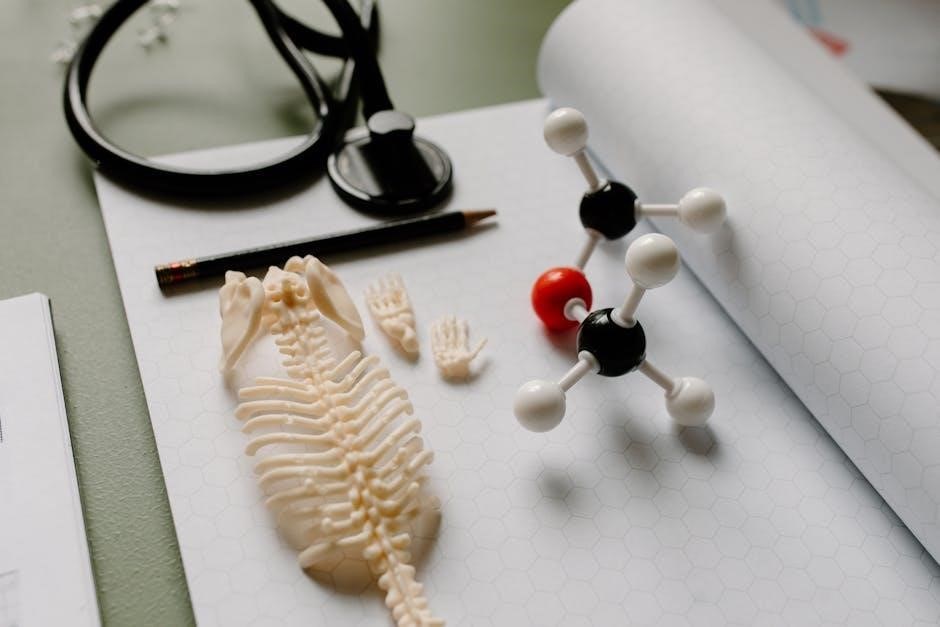
Year 8 Science commonly covers Biology, Chemistry, and Physics. PDF practice papers with answers focus on cells, matter, and forces, aiding comprehension.
Biology ⸺ Cells and Organisms
Year 8 Biology frequently centers on understanding cells as the basic units of life, exploring their structures – nucleus, cytoplasm, cell membrane – and functions. Test papers often assess knowledge of plant and animal cells, highlighting their differences. Questions delve into organization levels: cells to tissues, tissues to organs, and organs to systems.
Expect questions on organisms, including classification (e.g., vertebrates, invertebrates), life processes like respiration and reproduction, and ecosystems. PDF resources with answers provide practice identifying cell parts, explaining functions, and analyzing food chains. Sample questions might ask students to compare cell types, describe how organisms adapt to their environment, or explain the importance of photosynthesis. Mastering these concepts builds a foundation for further biological study.
Chemistry ⸺ Matter and its Properties
Year 8 Chemistry introduces fundamental concepts of matter – solids, liquids, and gases – and their changing states. Test papers commonly assess understanding of particle theory, explaining how particles behave in different states and during phase transitions. Students are expected to grasp the concepts of mixtures and pure substances, including elements and compounds.
Questions frequently cover physical and chemical changes, focusing on identifying observable differences and understanding chemical reactions. PDF practice papers with answers allow students to practice identifying substances, describing changes in matter, and balancing simple chemical equations. Sample questions might involve classifying materials, explaining the properties of acids and bases, or predicting the outcome of a chemical reaction. A solid grasp of these principles is crucial.
Physics ⸺ Forces and Motion
Year 8 Physics introduces the fundamental principles of forces and motion, exploring concepts like gravity, friction, and Newton’s Laws of Motion. Test papers often assess understanding of how forces affect the movement of objects, including calculating speed, distance, and time. Students learn to differentiate between balanced and unbalanced forces and their impact on acceleration.
Common questions involve analyzing scenarios involving pushes, pulls, and the resulting motion. PDF practice papers with answers provide opportunities to practice applying formulas, interpreting graphs depicting motion, and explaining real-world examples of forces at play. Sample questions might ask students to calculate velocity, determine the net force acting on an object, or describe the effects of friction. Mastering these concepts builds a foundation for further study.

Utilizing Answer Keys Effectively
Answer keys are crucial for self-assessment, revealing areas of strength and weakness. Comparing your responses helps identify misunderstandings and improve future performance.
Understanding Common Mistakes
Analyzing errors in Year 8 Science test papers, particularly when utilizing PDF resources with answers, is paramount for effective learning. Students frequently misinterpret question wording, leading to incorrect answers despite understanding the underlying scientific principle.
Another common error involves unit conversions – failing to express answers in the correct units can result in lost marks. Conceptual misunderstandings, such as confusing mass and weight in physics, or incorrectly identifying parts of a cell in biology, are also prevalent.
Carefully reviewing the answer key, not just checking for the correct answer, but understanding why an answer is correct, is vital. Identifying patterns in mistakes allows targeted revision and prevents repeating the same errors in future assessments. Don’t simply memorize; strive for genuine comprehension.
Self-Assessment Techniques
Utilizing Year 8 Science test papers, especially those in PDF format with provided answers, offers excellent self-assessment opportunities. Begin by completing the paper under timed conditions to simulate the exam environment. Afterwards, meticulously compare your answers to the answer key, noting discrepancies.
Don’t just mark incorrect answers; analyze why you made those mistakes. Were they due to a lack of understanding, careless errors, or misinterpreting the question? Categorize your errors to identify weak areas.
Create a revision plan focusing on these areas. Re-attempt similar questions from different papers to reinforce learning. Regularly self-testing builds confidence and improves performance, maximizing the benefit of available resources.
Analyzing Performance to Improve
Leveraging Year 8 Science test papers (PDF with answers) allows detailed performance analysis. Track your scores across multiple papers to identify consistent strengths and weaknesses. Focus not just on the final score, but on performance within specific topics – biology, chemistry, or physics.
Pinpoint recurring error types: conceptual misunderstandings, calculation mistakes, or time management issues. Create targeted revision plans addressing these areas.
Review incorrect answers thoroughly, understanding the correct solution and the reasoning behind it. Consider seeking clarification from teachers or peers on challenging concepts. Consistent analysis and focused revision, using available resources, will demonstrably improve your understanding and exam results.

PDF Format and Accessibility
PDF documents offer convenient access to Year 8 Science test papers. They maintain formatting across devices and enable easy printing for offline study.
Advantages of PDF Documents
PDF (Portable Document Format) files present numerous benefits when accessing Year 8 Science test papers. Primarily, they ensure consistent formatting regardless of the operating system or device used – be it a computer, tablet, or smartphone. This consistency is crucial for accurately interpreting questions and diagrams.
Furthermore, PDFs are generally smaller in file size compared to other document formats, facilitating quicker downloads, even with limited internet bandwidth. They also support features like zooming, allowing students to closely examine detailed illustrations or complex equations. Importantly, PDFs are widely compatible and require minimal software to open, making them universally accessible.
The format also preserves the original layout intended by the test paper creator, preventing unwanted alterations during viewing or printing. This ensures a fair and standardized testing experience for all students utilizing these resources.
Software Required to Open PDFs
Fortunately, accessing Year 8 Science test papers in PDF format doesn’t necessitate specialized or expensive software. Most modern operating systems – Windows, macOS, and Linux – include a built-in PDF reader. Web browsers like Google Chrome, Mozilla Firefox, and Microsoft Edge also natively support opening and viewing PDF files directly within the browser window.
However, for more advanced features like editing, annotating, or converting PDFs, dedicated PDF reader software is available. Adobe Acrobat Reader is a popular, free option offering a comprehensive suite of tools. Alternatives include Foxit Reader and Sumatra PDF, both lightweight and efficient.
These programs ensure optimal viewing and interaction with the test papers, allowing students to fully utilize the resources for effective revision and practice.
Printing and Offline Access
A significant advantage of downloading Year 8 Science test papers as PDFs is the ability to print them for offline use. This is particularly beneficial for students who prefer to work through practice questions without a screen, or in environments with limited internet connectivity. Printing allows for traditional pen-and-paper practice, mirroring exam conditions.
Furthermore, PDFs can be easily saved to computers, tablets, or smartphones, granting access to the materials anytime, anywhere – even without an internet connection. This offline accessibility is invaluable for studying during commutes or in areas with unreliable Wi-Fi.
Having a physical copy or readily available digital file promotes focused revision and independent learning.

Year-Specific Variations in Test Content

Year 8 Science curricula evolve, impacting test content. Ensure practice PDFs align with the current syllabus and exam board specifications for accurate preparation.

Changes in Curriculum Over Time
Year 8 Science curricula aren’t static; they undergo periodic revisions reflecting advancements in scientific understanding and educational best practices. Consequently, test papers from previous years might not perfectly align with the current syllabus. Older PDF resources, while potentially useful for practicing core concepts, may contain content no longer assessed or present information in an outdated manner.
It’s crucial to prioritize practice materials specifically designed for the current academic year. Examining the latest curriculum guidelines from your child’s school or relevant exam board is essential. This ensures that the test papers used for preparation cover the topics and skills currently emphasized in Year 8 Science education. Regularly updated PDF downloads from reputable sources are invaluable for effective revision.
Adapting to Different Exam Boards
Year 8 Science test papers vary significantly depending on the examining board – AQA, Edexcel, OCR, or others. Each board possesses unique specifications, assessment styles, and content emphasis. A PDF resource effective for one board might be entirely unsuitable for another. Therefore, identifying your school’s specific exam board is paramount before sourcing practice materials.
When searching for free Year 8 Science test papers with answers, always confirm board compatibility. Websites offering resources often categorize papers by exam board. Utilizing materials aligned with your board’s syllabus ensures focused preparation. Ignoring this crucial step can lead to wasted effort and inaccurate assessment of your child’s understanding. Prioritize PDF downloads explicitly labeled for your specific exam board.
Focus on Current Scientific Understanding
Year 8 Science is a rapidly evolving field, and test content reflects the latest discoveries and understandings. Older Year 8 Science test papers with answers, even those available as PDF downloads, may contain outdated information or address concepts no longer emphasized in the curriculum. Therefore, prioritize recent papers – ideally from the last three to five years – to ensure relevance.
When seeking free resources, verify the publication date. Scientific terminology and models change; using current materials prepares students for the questions they’ll actually encounter. Focus on PDF documents that align with the most up-to-date syllabus guidelines. Regularly updated websites are invaluable for accessing current practice materials and fostering a strong grasp of modern scientific principles.

Beyond Test Papers: Additional Resources
Year 8 Science learning extends beyond tests! Explore online simulations, educational videos, and comprehensive revision guides to reinforce concepts and excel.
Online Science Simulations
Interactive science simulations offer a dynamic learning experience, complementing traditional Year 8 Science study. These virtual labs allow students to safely explore complex concepts like chemical reactions, physics principles, and biological processes. Unlike static PDF worksheets, simulations foster active participation and deeper understanding.
Many free platforms provide simulations tailored to the Year 8 curriculum, covering topics from forces and motion to cells and ecosystems. Students can manipulate variables, observe outcomes, and test hypotheses – skills crucial for success on science tests. These resources are particularly valuable for visualizing abstract ideas and reinforcing concepts learned from textbooks or practice papers. They provide a hands-on approach, enhancing retention and making learning more engaging.
Educational Videos and Tutorials
Educational videos and tutorials provide a visual and accessible way to learn Year 8 Science concepts, supplementing practice with test papers and PDF resources. Platforms like YouTube and Khan Academy host a wealth of content, explaining complex topics in a clear and concise manner. These resources cater to different learning styles, offering animated explanations, real-world examples, and step-by-step problem-solving demonstrations.
Students can revisit challenging topics as many times as needed, pausing and rewinding to ensure full comprehension; Searching for specific keywords related to the Year 8 curriculum will yield relevant tutorials. Utilizing these videos alongside practice questions can significantly improve understanding and boost confidence when tackling science assessments. They offer a flexible and engaging learning alternative.
Textbooks and Revision Guides
Textbooks and revision guides remain fundamental resources for Year 8 Science students preparing for assessments. These materials offer a structured approach to learning, covering all key topics in detail. They often include practice questions, diagrams, and explanations aligned with the curriculum, complementing freely available test papers and PDF answer keys.
Revision guides specifically condense information, highlighting essential concepts and providing targeted practice. Utilizing both textbooks for in-depth understanding and revision guides for focused review is highly effective. Students should actively engage with the material, taking notes and attempting practice questions to reinforce learning. These resources build a strong foundation for success in science examinations.