
Canon SX60 HS Manual: A Comprehensive Guide
Canon PowerShot SX60 HS owners will find this guide invaluable, detailing operation, quick start, advanced features, and menu functions for optimal use.
The Canon PowerShot SX60 HS is a versatile camera boasting a powerful 65x optical zoom and 20.2MP sensor. This guide serves as a comprehensive resource for both beginner and experienced photographers seeking to master its capabilities. It details everything from basic operations to advanced settings, ensuring users can fully leverage the camera’s potential.
Understanding the SX60 HS’s features, as outlined in the official manual, unlocks stunning image quality and creative control. This introduction sets the stage for a deep dive into its functionalities.
Key Features of the SX60 HS
The Canon SX60 HS distinguishes itself with a remarkable 65x optical zoom, enabling detailed shots from a distance. Its 20.2MP sensor delivers high-resolution images, while HS System enhances low-light performance. The camera supports various shooting modes, including Auto and Scene modes, offering versatility for diverse scenarios.
Furthermore, it features built-in Wi-Fi for easy photo transfer via Canon Camera Connect, as detailed in the user manual, making sharing simple and convenient.

Getting Started with Your SX60 HS
Begin your journey with the Canon SX60 HS by unpacking, charging the battery, and inserting a formatted memory card, as outlined in the manual.
Unboxing and Initial Setup
Upon unboxing your Canon PowerShot SX60 HS, carefully inspect the contents to ensure all components are present. These typically include the camera body, battery, battery charger, AC cable, and a comprehensive user manual. Before first use, remove all protective films and packaging materials.
Initial setup involves selecting your preferred language, setting the date and time, and configuring regional display settings. Refer to the manual’s ‘Basic Operation’ section for detailed, step-by-step instructions on navigating these initial settings. Proper setup ensures a smooth and personalized user experience from the start.
Charging the Battery
To charge the Canon PowerShot SX60 HS battery, connect the provided AC adapter to the battery charger and a wall outlet. Then, insert the battery into the charger, ensuring proper alignment. The charging indicator light will illuminate, typically red while charging and turning off or changing color when complete.
Initial charging may take several hours. Avoid interrupting the charging process. The manual details safe charging practices and recommends fully charging the battery before initial use for optimal performance and longevity.
Inserting and Formatting the Memory Card
The Canon PowerShot SX60 HS utilizes SD, SDHC, and SDXC memory cards. Locate the card slot, usually on the camera’s side, and insert the card until it clicks. To format the card, navigate to the camera’s menu, find the ‘Format’ option, and select it. Formatting erases all data, so back up important files beforehand.
Formatting ensures compatibility and optimal performance. The manual advises formatting cards in the camera for best results, avoiding potential issues with card readers.

Understanding the Camera Interface
Canon SX60 HS features intuitive button and dial functions, a navigable menu system, and a clear display providing essential shooting information.
Button and Dial Functions
The Canon SX60 HS boasts a thoughtfully designed interface. The power button initiates camera operation, while the mode dial selects shooting modes like Auto, Scene, and Movie. Zoom control facilitates framing, and the shutter button captures images.
Dials adjust settings like aperture and ISO. Dedicated buttons provide quick access to frequently used functions, including flash and display options. Understanding these controls unlocks efficient and creative photography, allowing users to swiftly adapt to various shooting scenarios and personalize their experience.
Menu Navigation
Accessing the Canon SX60 HS menu is done via the MENU button. The menu is logically organized into sections: Shooting, AF, Setup, and others. Use the directional buttons to navigate through options and the SET button to confirm selections.
Each section contains numerous customizable settings, allowing fine-tuning of image quality, camera behavior, and personal preferences. Familiarizing yourself with the menu structure is crucial for unlocking the camera’s full potential and tailoring it to your specific photographic needs.
Display Information
The Canon SX60 HS’s LCD screen provides comprehensive shooting information. This includes the selected shooting mode, shutter speed, aperture, ISO sensitivity, and remaining battery life.
During Live View, a helpful grid display assists with composition, and a histogram allows for accurate exposure assessment. Customizable display settings let you choose which information is visible, tailoring the screen to your preferences for a clear and uncluttered shooting experience.

Basic Shooting Modes
Canon SX60 HS offers Auto, Scene Modes (Portrait, Landscape, Sports), and Creative Filters for effortless photography in diverse situations and artistic expression.
Auto Mode
Canon’s Auto mode on the SX60 HS simplifies photography, intelligently detecting scenes and automatically adjusting settings for optimal results. This mode is perfect for beginners or quick snapshots, eliminating the need for manual adjustments of aperture, shutter speed, or ISO.
The camera analyzes the subject – people, landscapes, or close-ups – and selects the most appropriate settings. While convenient, Auto mode offers limited creative control; however, it consistently delivers well-exposed and focused images in various conditions, making it a reliable choice for everyday shooting.
Scene Modes (Portrait, Landscape, Sports, etc.)
The Canon SX60 HS offers a variety of Scene modes tailored for specific shooting situations. Portrait mode enhances skin tones and blurs backgrounds, while Landscape optimizes for sharp, detailed scenery. Sports mode prioritizes fast shutter speeds to freeze action, and Night mode excels in low-light conditions.
These pre-set modes simplify achieving desired results without manual adjustments; Selecting the appropriate scene mode ensures the camera prioritizes settings best suited for the subject, improving image quality and convenience.
Creative Filters
The Canon SX60 HS empowers users with a range of Creative Filters to instantly transform images. Options include Fish-eye, Miniature, Toy Camera, and Soft Focus, adding artistic flair directly within the camera. These filters apply unique effects, altering colors, textures, and perspectives.
Experimenting with these filters allows for creative expression without post-processing. Preview the effect on the LCD screen before capturing, ensuring the desired aesthetic is achieved. They’re perfect for adding a personal touch to photos.

Advanced Shooting Techniques
Canon SX60 HS users can master aperture, shutter speed, ISO, and focusing modes for greater control and stunning, professional-quality photographs.
Aperture and Shutter Speed Control
Canon SX60 HS offers manual control over aperture and shutter speed, allowing photographers to creatively influence image exposure and depth of field. Adjusting aperture (f-stop) impacts the amount of light reaching the sensor and controls background blur – lower f-numbers create shallower depth of field, ideal for portraits. Shutter speed determines how long the sensor is exposed to light; faster speeds freeze motion, while slower speeds allow more light in for low-light scenarios, potentially requiring a tripod to avoid blur. Experimenting with these settings unlocks artistic possibilities beyond automatic modes.
ISO Settings and Noise Reduction
Canon SX60 HS’s ISO settings control the camera’s sensitivity to light. Lower ISO values (e.g., 100) produce cleaner images but require more light. Higher ISO values (e.g., 3200) enable shooting in darker conditions, but introduce digital noise – graininess that degrades image quality. The SX60 HS incorporates noise reduction technology to minimize this effect. Understanding the trade-off between brightness and noise is crucial for achieving optimal image quality in various lighting situations. Experiment to find the best balance.
Focusing Modes (Single, Continuous, Manual)
The Canon SX60 HS offers several focusing modes. Single AF is ideal for stationary subjects, locking focus when the shutter button is half-pressed. Continuous AF tracks moving subjects, constantly adjusting focus. Manual Focus allows precise control, useful for challenging situations where autofocus struggles. Selecting the appropriate mode ensures sharp, well-focused images. Experiment with each mode to understand its strengths and weaknesses, adapting to different shooting scenarios for consistently excellent results.
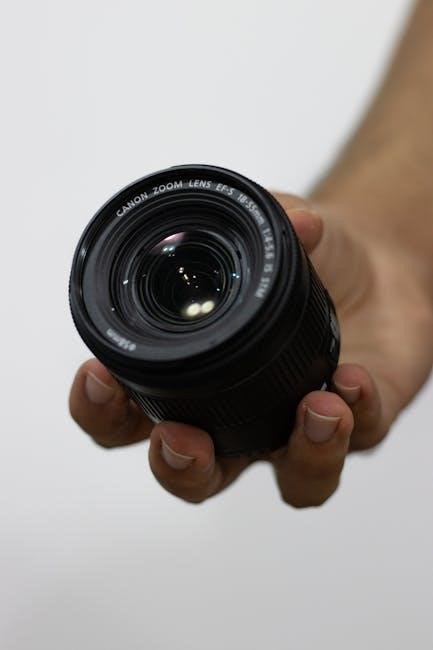
Zoom Functionality
Canon SX60 HS boasts a powerful 65x optical zoom, alongside digital zoom options; utilize zoom framing assist for subjects at maximum magnification.
Utilizing the 65x Optical Zoom
The Canon PowerShot SX60 HS’s impressive 65x optical zoom allows for capturing distant subjects with remarkable clarity, eliminating pixelation common with digital zoom. To zoom, use the zoom lever surrounding the shutter button – push towards ‘W’ for wide-angle and ‘T’ for telephoto.
Be mindful of camera shake at higher zoom levels; employ a tripod or enable image stabilization for sharper results. The zoom framing assist feature helps locate subjects when fully zoomed in, simplifying composition. Experiment with varying zoom levels to achieve creative perspectives and compelling photographs.
Digital Zoom Considerations
While the Canon SX60 HS offers digital zoom extending beyond the 65x optical range, understand that it utilizes software to enlarge the image. This can result in a noticeable loss of image quality and increased pixelation, particularly at maximum digital zoom levels.
It’s generally recommended to rely on the optical zoom whenever possible for the best results. If digital zoom is necessary, use it sparingly and be prepared for potential compromises in image clarity. Consider cropping images in post-processing for a cleaner look.
Zoom Framing Assist
The Canon SX60 HS features a Zoom Framing Assist function, incredibly helpful when using the substantial 65x optical zoom. When activated, pressing the zoom button halfway automatically zooms out to encompass the entire subject within the frame, preventing it from being lost during zooming.
Releasing the button then allows you to resume zooming, ensuring your subject remains centered and in focus. This feature is particularly useful for tracking moving subjects or quickly locating targets at long distances.
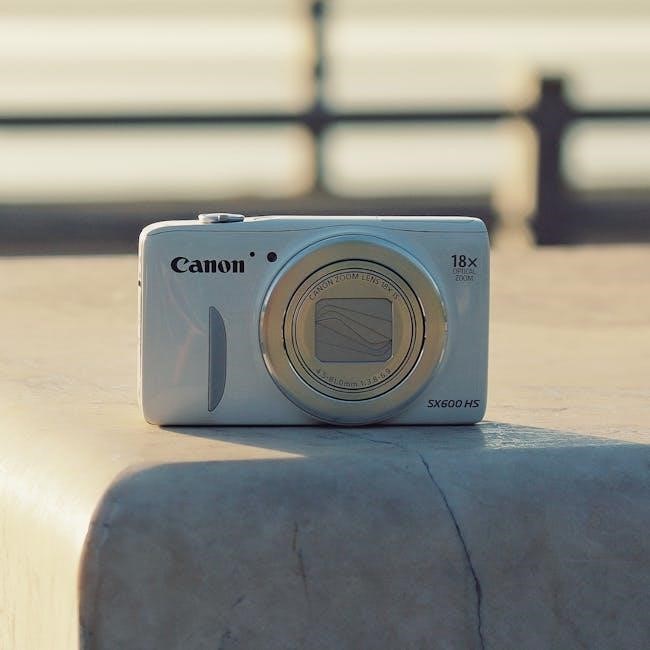
Movie Recording
Canon SX60 HS records videos in various resolutions; utilize the zoom function during recording and adjust audio settings for optimal video quality;
Recording Video in Different Resolutions
The Canon PowerShot SX60 HS offers a range of video recording resolutions to suit your needs. You can choose from Full HD 1920×1080 for detailed videos, or lower resolutions like 1280×720 or 640×480 for smaller file sizes and easier sharing.
Higher resolutions demand more storage space on your memory card. Consider your intended use – sharing online versus viewing on a large screen – when selecting a resolution. Experiment with different settings to find the best balance between quality and file size for your specific shooting scenarios.
Using the Zoom During Movie Recording
The Canon SX60 HS allows zooming while recording video, utilizing its impressive 65x optical zoom. However, be aware that zooming during recording can introduce slight audio fluctuations due to the microphone picking up the zoom motor.
For smoother results, consider pre-framing your shot with the desired zoom level before starting recording. Utilize the zoom framing assist feature for stability. Digital zoom is also available, but reduces image quality.
Audio Settings for Video
The Canon SX60 HS offers basic audio control during movie recording. While it doesn’t feature extensive manual audio adjustments, you can adjust the recording level within the camera’s menu. Ensure sufficient ambient sound for clear audio capture.
Be mindful of wind noise; an external microphone is recommended for professional-quality sound. The built-in microphone is suitable for casual recordings, but may pick up unwanted background sounds.

Connectivity and Transferring Photos
Canon SX60 HS connects via USB and HDMI. Utilize Canon Camera Connect for wireless photo transfer to smartphones and tablets for easy sharing.
Connecting to a Computer via USB
To connect your Canon PowerShot SX60 HS to a computer using a USB cable, ensure both devices are powered on. Use a standard USB cable (not included) and connect it to the camera’s USB port and your computer.
Your computer should recognize the camera as a storage device, allowing you to directly transfer photos and videos. You may need to select “PTP” mode on the camera’s screen if it doesn’t automatically connect. Alternatively, install Canon’s Image Transfer Utility software for streamlined image management and transfer options.
Wireless Transfer with Canon Camera Connect
Utilize the Canon Camera Connect app (available for iOS and Android) for seamless wireless photo and video transfer. First, enable Wi-Fi on your SX60 HS through the camera’s menu. Then, launch the app on your smartphone or tablet and follow the on-screen instructions to connect to the camera’s Wi-Fi network.
Once connected, you can browse, download, and share your images directly from the app. Canon Camera Connect also offers remote live view control and shooting capabilities;
Connecting to a TV via HDMI
To view your SX60 HS photos and videos on a larger screen, connect the camera to your TV using an HDMI cable. Locate the HDMI port on your camera (typically covered by a rubber flap). Connect one end of the HDMI cable to the camera and the other to an available HDMI input on your TV.
Select the correct HDMI input on your TV using your TV’s remote. Your camera’s display will then appear on the TV screen, allowing you to enjoy your content.
Customizing Your SX60 HS
Canon SX60 HS customization includes functions, My Menu settings, and button adjustments, tailoring the camera to your shooting preferences for enhanced control.
Custom Functions
Canon SX60 HS custom functions allow personalized camera operation. These settings modify button assignments and dial behaviors, streamlining workflows for individual photographers; Users can reassign direct controls, optimizing access to frequently used features like focus mode or ISO settings. This customization enhances shooting efficiency, reducing menu navigation during critical moments. Explore the menu to discover a range of customizable options, tailoring the camera precisely to your shooting style and preferences for a truly personalized experience.
My Menu Settings
Canon SX60 HS’s “My Menu” feature provides a personalized menu system. Users can register frequently accessed settings for quick retrieval, eliminating repetitive navigation through the full menu structure. This customization streamlines workflow, allowing photographers to swiftly adjust essential parameters like image quality or shooting mode. Create a tailored menu reflecting individual shooting preferences, enhancing efficiency and responsiveness in diverse photographic situations; It’s a powerful tool for optimizing the camera to your unique needs.
Button Customization
Canon SX60 HS allows users to reassign functions to specific buttons, tailoring the camera’s controls to their shooting style. This customization enhances operational efficiency by placing frequently used settings at your fingertips. Through the menu, you can modify button behavior, assigning direct access to features like ISO speed, white balance, or focus modes. This personalized setup minimizes menu diving, enabling faster adjustments during critical shooting moments and improving overall responsiveness.

Troubleshooting Common Issues
Canon SX60 HS users may encounter issues like the camera not powering on, image quality problems, or memory card errors; solutions are detailed here.
Camera Not Turning On
If your Canon SX60 HS fails to power on, first ensure the battery is fully charged and correctly inserted. Try a different, known-good battery if possible. Verify the battery compartment contacts are clean and free of corrosion.
Also, check the power mode switch is set to the ‘ON’ position. If the issue persists, attempt a hard reset by removing the battery and memory card for several minutes before reinserting. A faulty battery or charger could also be the cause, requiring replacement.
Image Quality Problems
Poor Canon SX60 HS image quality can stem from several factors. Confirm the correct shooting mode is selected – Auto often suffices, but Scene modes optimize for specific conditions. Check ISO settings; higher ISOs introduce noise. Ensure the lens is clean, as smudges drastically affect clarity.
Also, verify sufficient light is available, and consider using a tripod for sharper images in low light. Review image settings like sharpness and contrast within the camera’s menu.
Memory Card Errors
Canon SX60 HS memory card errors can disrupt shooting. First, ensure the card is compatible (SD, SDHC, SDXC). Try reformatting the card within the camera – this often resolves minor issues. If errors persist, test a different memory card to isolate the problem.
Avoid removing the card during operation. A corrupted card may require recovery software, but data loss is possible. Regularly back up images to a computer or cloud storage.
Maintaining Your Camera
Canon SX60 HS longevity relies on proper care: regularly clean the lens, store the battery correctly, and protect the camera from harsh conditions.
Cleaning the Lens
Maintaining a pristine lens is crucial for optimal Canon SX60 HS image quality. Use a blower to remove loose dust and debris first. For fingerprints or smudges, gently wipe with a microfiber lens cleaning cloth.
Avoid harsh chemicals or abrasive materials, as these can damage the lens coating. If stubborn marks persist, consider a lens cleaning solution specifically designed for camera lenses, applying it sparingly to the cloth, not directly to the lens. Regular cleaning ensures clear, sharp photos.
Battery Care
To maximize your Canon SX60 HS battery life, avoid extreme temperatures. Don’t leave the camera or battery in direct sunlight or freezing conditions for extended periods. When storing for long durations, charge the battery to around 50% to prevent over-discharge.
Only use the Canon-supplied charger. Avoid frequent full discharges, as this can reduce the battery’s lifespan. Properly insert the battery and avoid dropping it, which could cause damage.
Storage Recommendations
When storing your Canon SX60 HS, keep it in a dry, dust-free environment. A camera bag is ideal for protection. Remove the battery if storing for an extended period to prevent potential leakage or corrosion. Store the memory card separately in its case.
Avoid storing the camera in locations with high humidity or extreme temperatures. Protect the lens from direct sunlight and physical damage during storage.

Understanding the User Manual (PDF)
The official Canon SX60 HS PDF manual offers detailed instructions, a quick start guide, and comprehensive menu function explanations for users.
Locating the Official Canon SX60 HS Manual
Finding the official Canon PowerShot SX60 HS manual is straightforward. Canon’s official website is the primary source, offering a downloadable PDF version for free. A simple web search using terms like “Canon SX60 HS manual PDF” will also yield direct links to the document.
Alternatively, many camera review and support websites host links to the manual. Ensure the source is reputable to avoid downloading potentially harmful files. The manual provides comprehensive guidance on all camera features and functions.
Navigating the PDF Manual
The Canon SX60 HS PDF manual utilizes a searchable format, allowing quick access to specific topics using keywords. Most PDF readers offer a table of contents for easy browsing of sections. Utilize the bookmark feature to save frequently referenced pages for rapid access.
Hyperlinks within the document connect related information, streamlining the learning process. Zoom functionality enhances readability, and the search tool efficiently locates specific functions or settings.
Frequently Asked Questions (FAQ) Section
Common queries regarding the Canon SX60 HS often involve memory card compatibility, troubleshooting image quality issues, and understanding zoom functionality. Users frequently ask about wireless transfer setup with Canon Camera Connect and resolving camera power-on problems.
The manual’s FAQ section addresses these concerns, offering step-by-step solutions and clarifying complex settings. It’s a valuable resource for quick answers to common operational questions.