
Manual Pumps for Wells: A Comprehensive Guide (Updated 02/26/2026)
Navigating water access without electricity demands understanding manual well pumps, crucial for emergencies and off-grid living. These systems offer reliable hydration,
especially during power outages, and cater to diverse well depths with varying pump types.
Understanding the Need for a Manual Well Pump
Reliance on electric well pumps leaves properties vulnerable during power outages, highlighting the critical need for a backup solution. Manual well pumps provide essential water access when the grid fails, ensuring continued hydration for families and livestock. This is particularly vital in rural areas prone to frequent or extended power disruptions.
Beyond emergencies, a manual pump offers independence from rising energy costs and potential grid instability. Homesteading and off-grid lifestyles often prioritize self-sufficiency, making manual pumps a cornerstone of a resilient water system. Even for those with reliable electricity, a manual pump provides peace of mind, knowing a water source remains accessible regardless of external factors. Consider a manual pump as a proactive investment in water security, offering a dependable alternative when you need it most.
Emergency Water Access & Power Outages
Power outages can swiftly disrupt access to a fundamental necessity: water. Manual well pumps become invaluable during these times, offering a lifeline when electric pumps cease to function. This is especially crucial for maintaining basic hygiene, sanitation, and providing water for livestock. A hand-operated pump ensures continued access, even during prolonged grid failures.
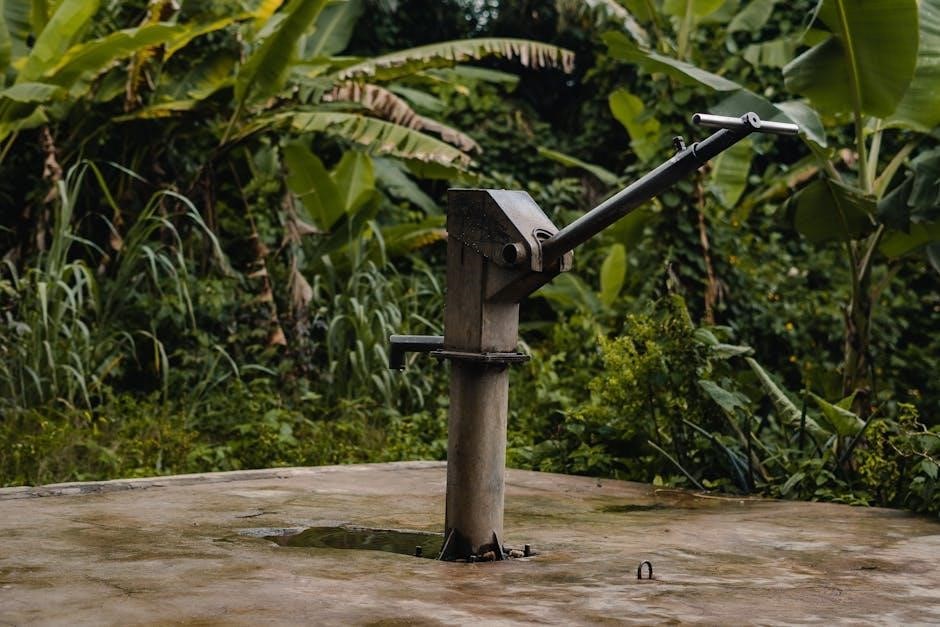
Preparing for emergencies extends beyond simply having a pump; it’s about ensuring self-reliance. Manual pumps eliminate dependence on external power sources, offering a robust solution for unpredictable events. Whether it’s a severe storm, a natural disaster, or a localized power disruption, a manual pump provides a dependable water supply. Prioritizing this preparedness can significantly mitigate the challenges posed by unexpected emergencies, safeguarding your family’s well-being.
Well Depth Considerations & Pump Limitations
The depth of your well is a primary factor in selecting the appropriate manual pump. Traditional above-ground lift pumps are generally limited to a lift of approximately 32 feet, making them unsuitable for deeper wells without modifications. While intake jets can attempt to improve lift, this isn’t viable with manual pumps.
For wells exceeding 400 feet, deep well hand pumps are necessary, though options are limited. Understanding these limitations is crucial; attempting to use an inadequate pump will result in inefficiency or complete failure. Careful assessment of your well’s depth, alongside realistic expectations of manual pumping effort, will guide you toward a suitable and effective solution. Proper pump selection ensures a reliable water source, tailored to your specific well characteristics.

Types of Manual Well Pumps
Several manual pump designs exist, each suited for different well depths and user needs. Options include traditional lift pumps, deep well hand pumps, centrifugal, and jet pumps.
Lift Pumps: The Traditional Approach
Lift pumps represent a classic method for drawing water from wells, relying on atmospheric pressure and a piston mechanism. These pumps are generally effective for wells up to 32 feet deep, though modifications like jet intake can marginally extend this range. However, achieving greater depths with standard lift pumps proves challenging.
The Simple Pump is noted as a rare lift pump capable of integration with a home’s pressure tank, enabling full use of fixtures and appliances – a significant advantage. Most lift pumps require manual operation, demanding physical effort to supply water. While simple in design, they offer a dependable, low-tech solution for basic water needs, particularly in scenarios where electricity is unavailable or unreliable. They are often favored for filling buckets or providing water for livestock.
Deep Well Hand Pumps (400ft+ Capability)
Addressing wells exceeding 32 feet in depth necessitates specialized deep well hand pumps, capable of overcoming significant hydrostatic pressure. Reaching depths of 400 feet or more requires robust construction and efficient pumping mechanisms. These pumps differ significantly from traditional lift pumps, employing more complex designs to draw water from substantial depths.
Finding options for deep wells (around 400 feet) is possible, as several companies offer pumps designed for varying depths. The Simple Pump stands out as one of the few lift pumps that can interface with a home’s pressure tank, providing consistent water pressure throughout the plumbing system. However, it’s crucial to acknowledge that achieving comparable performance to electric submersible pumps with manual operation is challenging, requiring considerable physical exertion.
Centrifugal Hand Pumps: Efficiency and Noise
Centrifugal hand pumps offer a potentially efficient method for water extraction, but come with notable drawbacks regarding manual operation. These pumps excel at moving water, utilizing a rotating impeller to generate centrifugal force. However, their effectiveness is heavily reliant on consistent, high-speed operation, which can be difficult to maintain with manual power.
A key consideration with centrifugal pumps is noise generation; they can be relatively loud during operation. While suitable for certain applications, they are generally limited in lift capacity and aren’t ideally suited for deep well scenarios. They are one of the several types of well pumps available, alongside submersible and jet pumps, each designed for specific needs.
Jet Pumps: Limited Lift, Not Ideal for Manual Operation
Jet pumps, while common in powered well systems, present significant challenges when adapted for manual operation due to inherent limitations in lift capacity. These pumps utilize a jet of water to create a vacuum, drawing water from the well. However, this process requires substantial pressure, making manual operation exceedingly difficult and inefficient.
Above-ground pumps, including jet pumps, are generally restricted to a lift of approximately 32 feet. Attempts to overcome this limitation with intake jets are not viable options for hand-powered systems. Consequently, jet pumps are not a practical choice for deep wells (400ft+) or situations demanding reliable manual water access. Other pump types, like lift pumps, are far more suitable for manual applications.

Key Features to Consider When Choosing a Pump
Selecting the right manual well pump requires careful evaluation of crucial factors: pump head, materials, cylinder diameter, and handle ergonomics all impact performance and longevity.
Pump Head & Total Dynamic Head
Understanding pump head and total dynamic head (TDH) is paramount when selecting a manual well pump. Pump head refers to the maximum height the pump can lift water, typically around 32 feet for above-ground models. However, real-world performance is dictated by TDH.
TDH encompasses not only the vertical distance from the water level in the well to the pump’s discharge point but also friction losses within the pipes and fittings. A deeper well necessitates a higher TDH rating.
Accurately calculating TDH – considering pipe length, diameter, and elevation changes – ensures the chosen pump can effectively deliver water to your desired location. Ignoring TDH can result in significantly reduced flow or the pump’s inability to operate at all.
Materials of Construction (Cast Iron vs. Stainless Steel)
The material composing a manual well pump significantly impacts its longevity and suitability for your well water. Traditionally, cast iron was favored for its affordability and robustness, but it’s susceptible to corrosion, particularly with acidic water. Regular maintenance, including painting, is crucial to mitigate rust.
Stainless steel offers superior corrosion resistance, making it ideal for challenging water conditions and extending the pump’s lifespan. While initially more expensive, stainless steel minimizes long-term maintenance and replacement costs.
Consider your water’s chemistry when choosing. If corrosion is a concern, investing in a stainless steel pump is prudent. However, for neutral water and diligent upkeep, a cast iron pump can provide reliable service.
Cylinder Diameter & Pumping Capacity
The cylinder diameter of a manual well pump directly correlates to the volume of water delivered with each stroke. A larger diameter cylinder generally equates to a higher pumping capacity, meaning more water is moved per effort. However, it also requires greater force to operate the pump handle.
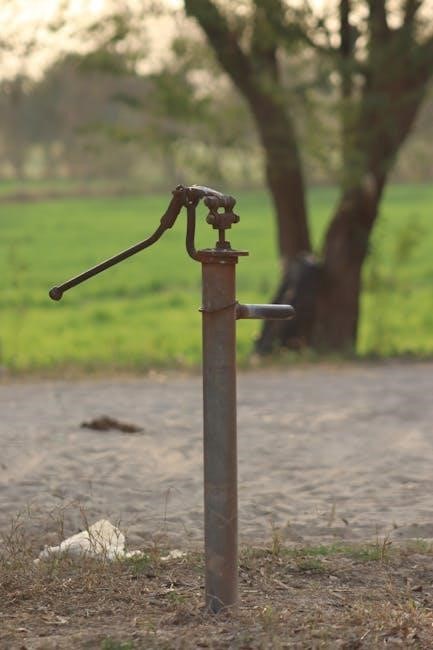
Smaller diameter cylinders are easier to operate, making them suitable for users with limited strength, but they yield less water per stroke. Carefully assess your household’s water demands and the physical capabilities of those who will operate the pump.
Matching cylinder size to well depth and desired flow rate is crucial for optimal performance. Consider the trade-off between ease of use and water output when making your selection.
Handle Design & Ergonomics
The handle design of a manual well pump significantly impacts user comfort and efficiency. Ergonomic handles reduce strain during operation, especially important during prolonged use or emergency situations. Look for handles with comfortable grips, ideally made from materials that provide a secure hold even when wet.
Handle length and shape also play a role. Longer handles offer greater leverage, reducing the force needed for each stroke, while curved or angled handles can improve pumping posture. Consider the height and physical build of potential users when selecting a pump.
Durable construction is essential; handles should withstand repeated use and exposure to the elements. A well-designed handle transforms a laborious task into a manageable one.

Installation Considerations
Proper installation is vital for optimal performance. Location – above or below ground – impacts accessibility and protection from the elements, requiring careful planning and execution.
Above Ground vs. Below Ground Installation
Choosing between above-ground and below-ground installation significantly impacts your manual well pump’s functionality and maintenance. Above-ground pumps are generally easier to install and repair, offering direct access for troubleshooting and winterization. However, they are susceptible to freezing temperatures and require protection from the elements – a pump house is often recommended.
Below-ground installations, while more complex initially, provide natural insulation against freezing and shield the pump from direct sunlight and potential damage. This method often necessitates excavation and careful sealing to prevent contamination. Consider the local climate and accessibility when deciding; a deep well may necessitate a below-ground setup for optimal performance and protection, while simpler applications benefit from above-ground convenience.
Priming the Pump: A Critical Step
Priming is absolutely essential for the successful operation of most manual well pumps, particularly lift pumps. These pumps rely on creating a vacuum to draw water from the well, and air within the pump cylinder prevents this. Priming involves filling the pump cylinder and intake pipe with water, displacing any air pockets.
Typically, this is achieved by carefully pouring water into the priming port until water flows steadily from the pump outlet. Loss of prime is a common issue, often due to leaks in connections or a faulty check valve. Regular inspection and tightening of fittings are crucial. Understanding your pump’s specific priming requirements, as outlined in the manufacturer’s instructions, is vital for consistent performance.
Connecting to Your Home’s Plumbing (Pressure Tank Compatibility)
Integrating a manual well pump with your existing home plumbing requires careful consideration, especially regarding pressure tanks. While many standard well pumps are designed to work with a pressure tank, maintaining consistent water pressure with a manual system presents unique challenges.
The Simple Pump is noted as an exception, capable of pumping directly into a pressure tank, allowing for full use of fixtures. However, most lift pumps lack this capability. Direct connection without a tank results in fluctuating pressure dependent on pumping effort. Adapting the plumbing may involve installing a foot valve and ensuring compatible pipe sizes. Professional plumbing advice is recommended for optimal and safe integration.
Intake Pipe Size and Depth
Selecting the correct intake pipe size and depth is paramount for efficient manual well pump operation. Generally, a larger diameter pipe minimizes friction loss, improving water flow. However, the optimal size depends on the pump’s specifications and well characteristics.
Crucially, above-ground pumps are limited to approximately 32 feet of lift due to atmospheric pressure. While intake jets can marginally improve this, they aren’t viable with hand pumps. Deeper wells (like the 400ft mentioned) necessitate deep well hand pumps specifically designed for such depths. Proper depth ensures the intake remains submerged, preventing air from entering the system and maintaining prime. Careful measurement and appropriate pipe selection are vital for reliable water access.

Maintenance and Troubleshooting
Consistent upkeep ensures longevity and optimal performance of your manual well pump. Regular lubrication, winterization, and prompt attention to issues like prime loss are key.
Regular Lubrication of Moving Parts
Maintaining proper lubrication is paramount for the smooth operation and extended lifespan of your manual well pump. Moving components, such as the piston, rod, and bearings, experience friction during each pumping cycle. Neglecting lubrication leads to increased wear and tear, potentially causing seizing or reduced efficiency.
Utilize a food-grade, non-toxic grease specifically designed for well pump applications. Apply the grease to all moving parts at least annually, or more frequently with heavy use. Disassemble the pump head as needed to access all lubrication points. Pay close attention to the cylinder walls and piston, ensuring a consistent film of grease is present.
Avoid using petroleum-based lubricants, as they can contaminate the water supply. Regularly inspect the pump for signs of dry operation or excessive wear, and re-lubricate as necessary. Proper lubrication minimizes effort, maximizes water output, and safeguards your investment.
Winterizing Your Manual Well Pump
Protecting your manual well pump from freezing temperatures is crucial to prevent damage and ensure reliable water access throughout the winter months. Water expands when frozen, potentially cracking pump components and rendering the system inoperable. Thorough winterization involves draining all water from the pump cylinder, intake pipe, and any exposed plumbing.
Begin by disconnecting the pump head and carefully tilting the cylinder to expel any remaining water. Open the drain valve (if equipped) and allow complete drainage. For pumps with below-ground installations, consider adding antifreeze specifically designed for potable water systems to the intake pipe.
Insulate exposed pipes and the pump head with foam or heat tape. Regularly check for leaks or signs of freezing during extremely cold periods. Proper winterization safeguards your pump, guaranteeing a functional water source when spring arrives.
Common Issues & Solutions (Loss of Prime, Reduced Flow)
Manual well pumps, while robust, can encounter issues like loss of prime or reduced water flow. Loss of prime occurs when air enters the pump cylinder, hindering its ability to draw water. Re-priming usually involves slowly pouring water into the pump until it’s full, then operating the handle to expel air.
Reduced flow can stem from several causes. Check the intake pipe for obstructions or leaks, and ensure the pump leather or seals are in good condition. Worn seals diminish the pump’s suction power. A partially clogged well screen or intake foot valve can also restrict water flow.
Regularly inspect and clean these components. If issues persist, consider replacing worn parts. Addressing these problems promptly maintains optimal pump performance and consistent water supply.
Replacing Pump Leather & Seals
Maintaining a manual well pump often requires replacing the pump leather and seals, crucial components for creating a watertight seal and efficient operation. Over time, these parts wear down, leading to reduced flow or complete pump failure. Replacement involves disassembling the pump cylinder, carefully removing the old leather and seals, and installing new ones.
Ensure the new leather is properly sized and lubricated before installation. Seals should be seated correctly to prevent leaks. A common issue is improper seating, causing a loss of prime.
Consult your pump’s manual for specific instructions and diagrams. Using the correct replacement parts is vital for optimal performance and longevity. Regular inspection and timely replacement prevent more significant repairs.
Cost & Budgeting
Budgeting for a manual well pump includes the initial purchase, installation (DIY or professional fees), and ongoing maintenance expenses. Costs vary significantly based on pump type and depth.
Initial Pump Purchase Price

The upfront cost of a manual well pump varies considerably depending on the type, materials, and depth capacity required for your well. Basic lift pumps, suitable for shallow wells (under 25 feet), can start around $100-$300. However, these are limited in their application.
For deeper wells exceeding 400 feet, a deep well hand pump, like the Simple Pump, represents a significant investment, typically ranging from $800 to $1,500 or more. Stainless steel construction will naturally increase the price compared to cast iron models.
Centrifugal hand pumps, while potentially more efficient, may also fall within the $200-$600 range, but their limited lift capabilities often make them unsuitable for many wells. Remember to factor in the cost of any necessary adapters, fittings, or additional piping when calculating your total initial expenditure.
Installation Costs (DIY vs. Professional)
Installing a manual well pump presents a cost dichotomy: the savings of DIY versus the assurance of professional installation. A determined homeowner with plumbing experience might tackle installation themselves, potentially saving $500-$1000 or more. However, this requires significant physical effort, specialized tools, and a thorough understanding of well systems.
Professional installation, while costing $800 to $2,000+, ensures proper setup, adherence to local codes, and potentially a warranty on the work. Deep well pump installations, particularly those requiring connection to a home’s pressure tank, almost always necessitate a professional.
Consider factors like intake pipe depth, plumbing connections, and the pump’s location (above or below ground) when estimating costs. Incorrect installation can lead to inefficiency or even damage to the pump.
Long-Term Maintenance Expenses
Manual well pumps, while robust, aren’t maintenance-free; budgeting for ongoing expenses is crucial. Regular lubrication of moving parts – the pump head, handle joints, and cylinder – is essential, costing roughly $20-$50 annually for appropriate greases and oils. More significant expenses arise from wear and tear on components.
Pump leather and seals, vital for creating a vacuum, will eventually require replacement, potentially every 2-5 years, at a cost of $50-$150 per repair; Winterizing, if applicable, adds the cost of antifreeze or drain-down procedures.
Unexpected repairs, like a cracked cylinder or broken handle, can add further expenses. Proactive maintenance minimizes these, but a contingency fund of $100-$200 per year is prudent.
Alternatives to Traditional Hand Pumps
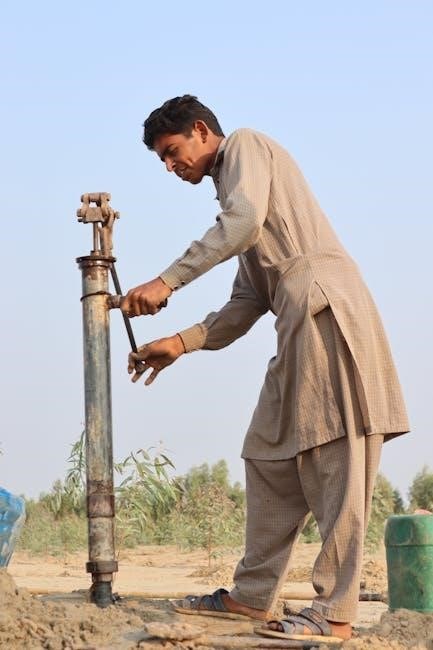
Beyond standard hand pumps, foot-operated and crank-operated well pumps provide alternative manual water solutions, offering varied ergonomics and potentially increased pumping efficiency.
Foot-Operated Well Pumps
Foot-operated well pumps represent a distinct alternative to traditional hand-powered systems, utilizing leg strength instead of upper body exertion. This design can be advantageous for individuals with limited arm strength or those seeking a different ergonomic experience. While less common than hand pumps, they offer a viable option for emergency water access or off-grid scenarios.
These pumps typically function by depressing a foot pedal, which in turn activates a pumping mechanism within the well. The efficiency and lift capacity of foot pumps can vary depending on the specific model and well depth. They are generally suited for shallower wells, though some designs may accommodate moderate depths. Considerations include the physical demands of continuous foot operation and the potential for fatigue during prolonged use. Foot pumps can be a practical solution when seeking a hands-free pumping method.
Crank-Operated Well Pumps
Crank-operated well pumps offer a mechanical advantage, potentially easing the effort required to draw water compared to direct hand pumping. Utilizing a rotating crank handle, these pumps convert rotational motion into reciprocating action, driving the pumping mechanism. This design can be particularly beneficial for users needing to pump larger volumes of water or those facing challenging well depths.
The gearing within a crank pump amplifies force, reducing the physical strain on the operator. However, it’s important to note that crank pumps may require more initial effort to start the pumping action. They are available in various configurations, suitable for both shallow and deeper wells, though deep well models often incorporate more robust construction and gearing. Consider the pump’s build quality and the ease of crank rotation when selecting a model, ensuring comfortable and efficient operation.